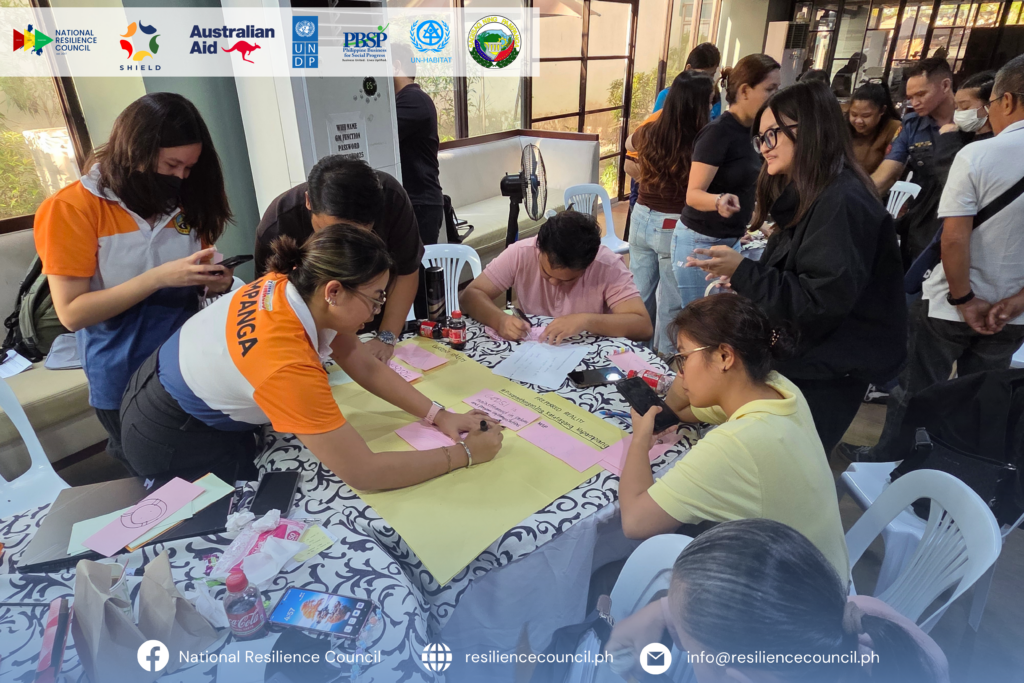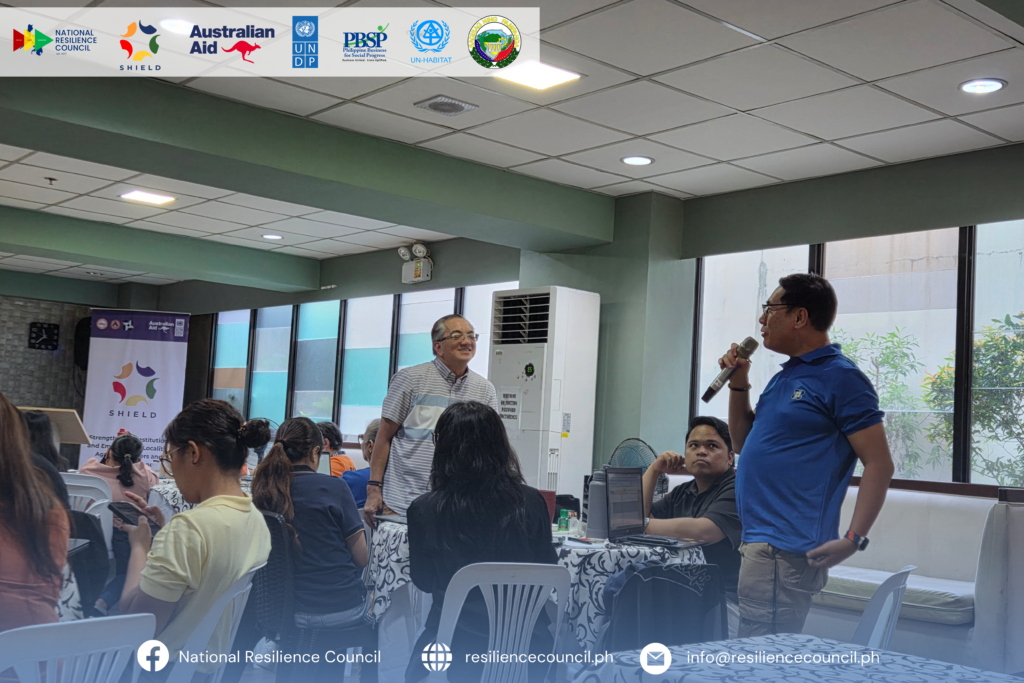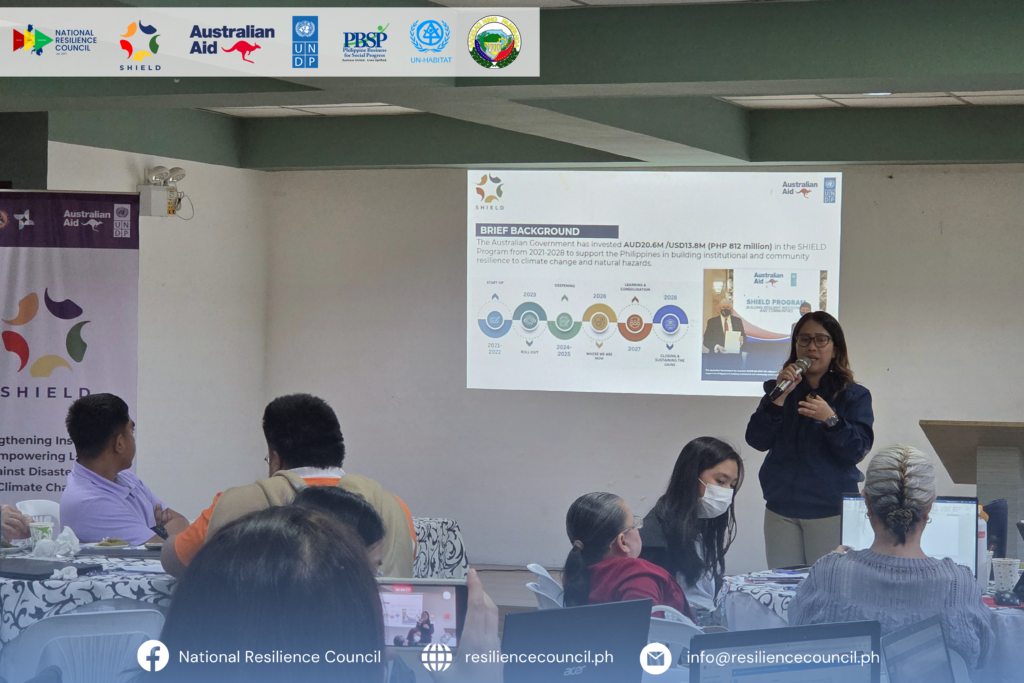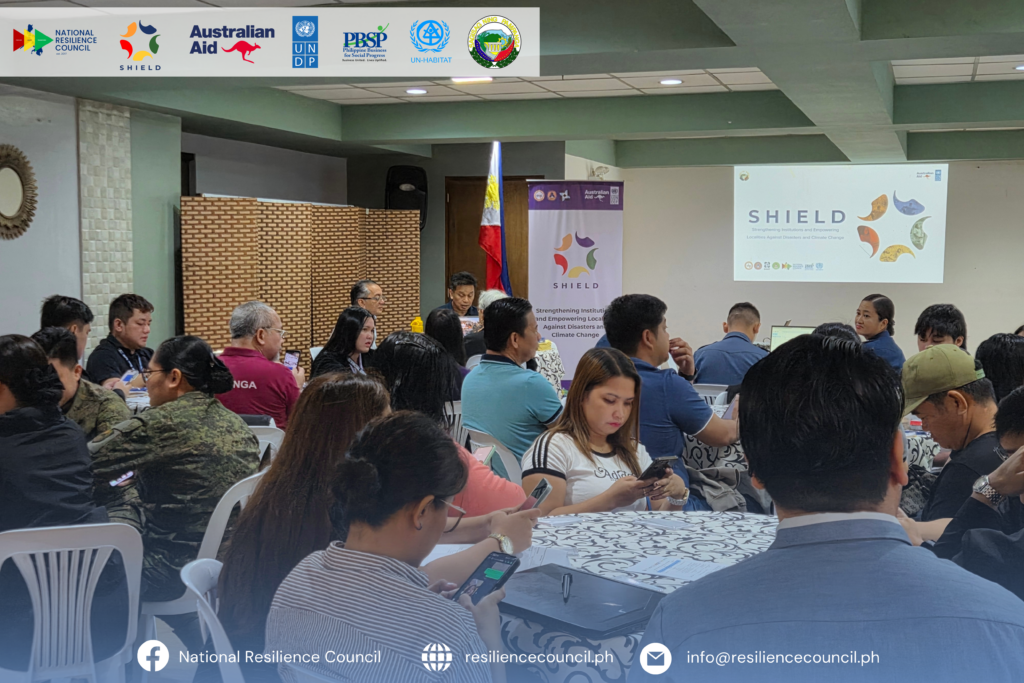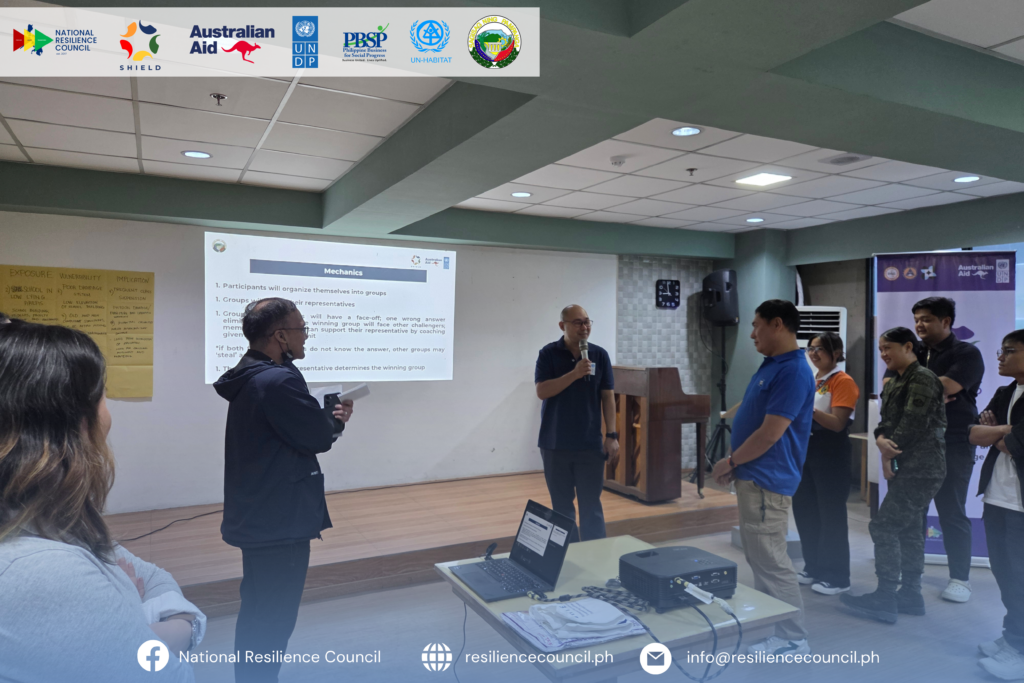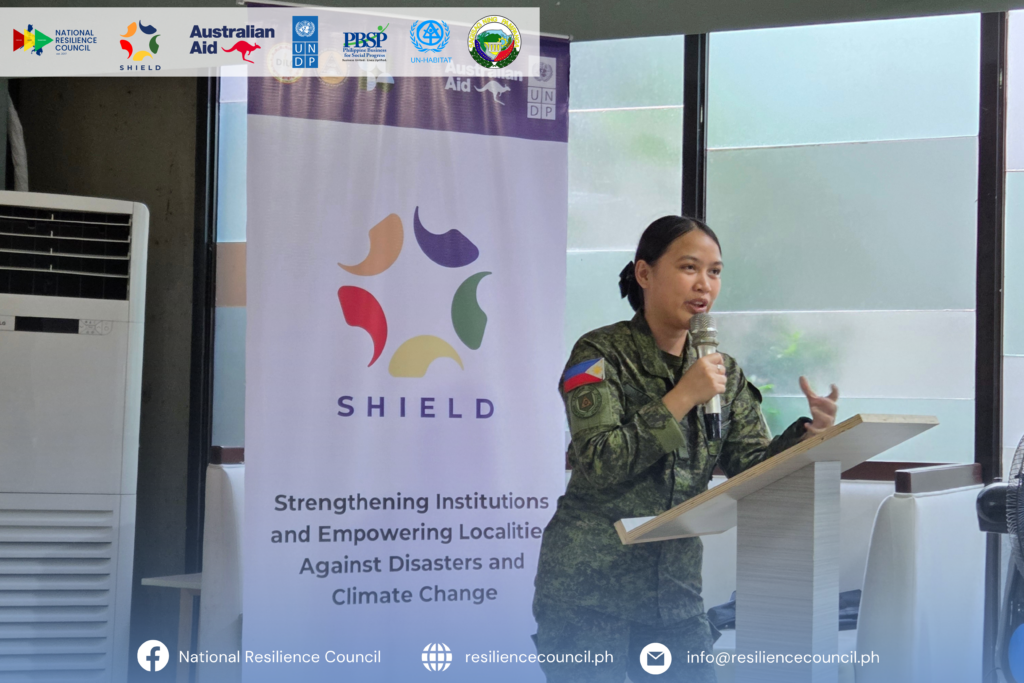
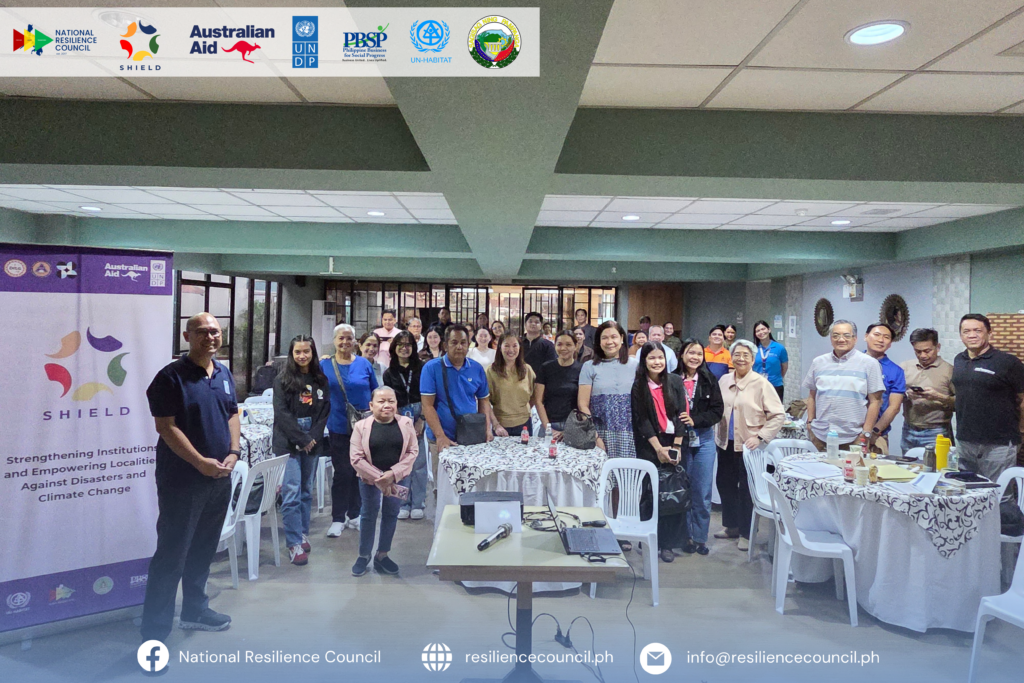
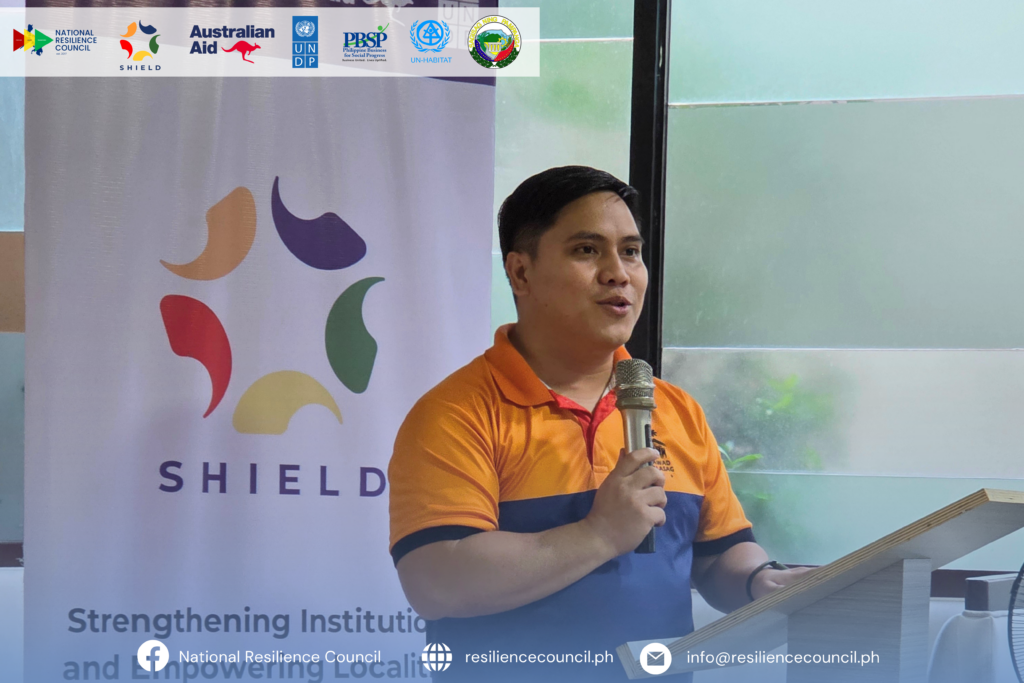
The National Resilience Council, together with the SHIELD Consortium partners—UNDP Philippines, UN-Habitat, and PBSP—conducted the two-day Resilience 101: Integrated Approach in Understanding, Planning, and Developing Resilience Actions for the Province of Pampanga on March 18–19, 2026.
Through this activity, local stakeholders strengthened their understanding of climate and disaster risks and gained practical tools such as Value Chain Analysis (VCA) and Business Continuity Planning (BCP), equipping them to take concrete steps toward more resilient and adaptive local development.
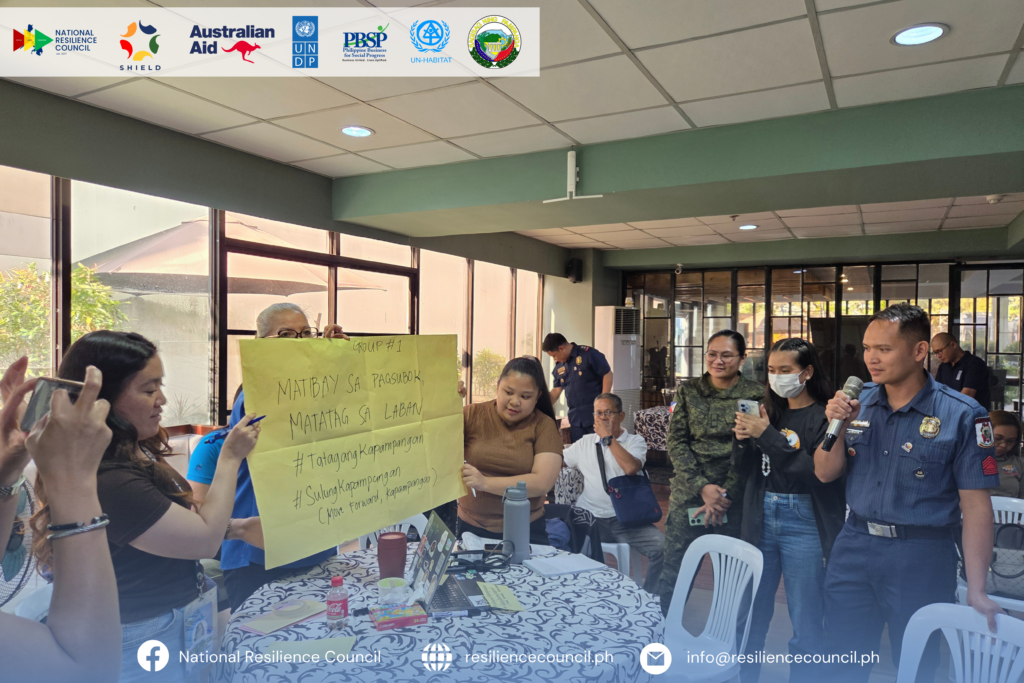
Participants identified key risks including flooding, storm surge, soil erosion, earthquakes, and urban heat, alongside critical exposures across communities, infrastructure, coastal areas, and schools, and vulnerabilities such as low-lying locations, poor drainage, weak coastal protection, environmental degradation, and aging structures—highlighting how high exposure and systemic vulnerabilities drive compounded impacts on health, livelihoods, supply chains, infrastructure, and education, and enabling more coordinated and resilience-focused local planning.
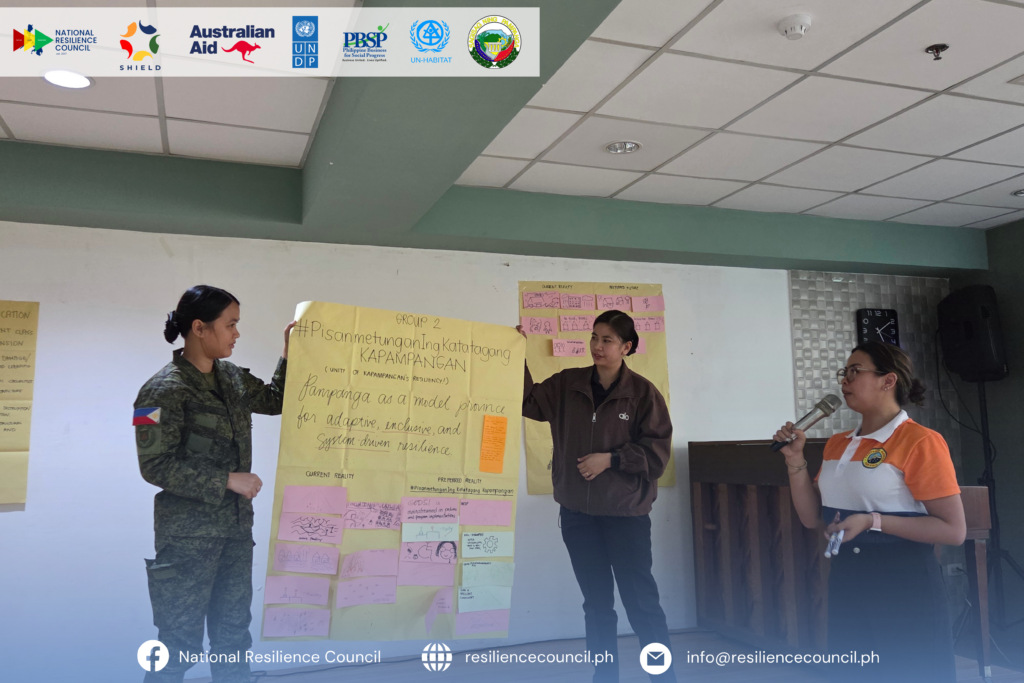
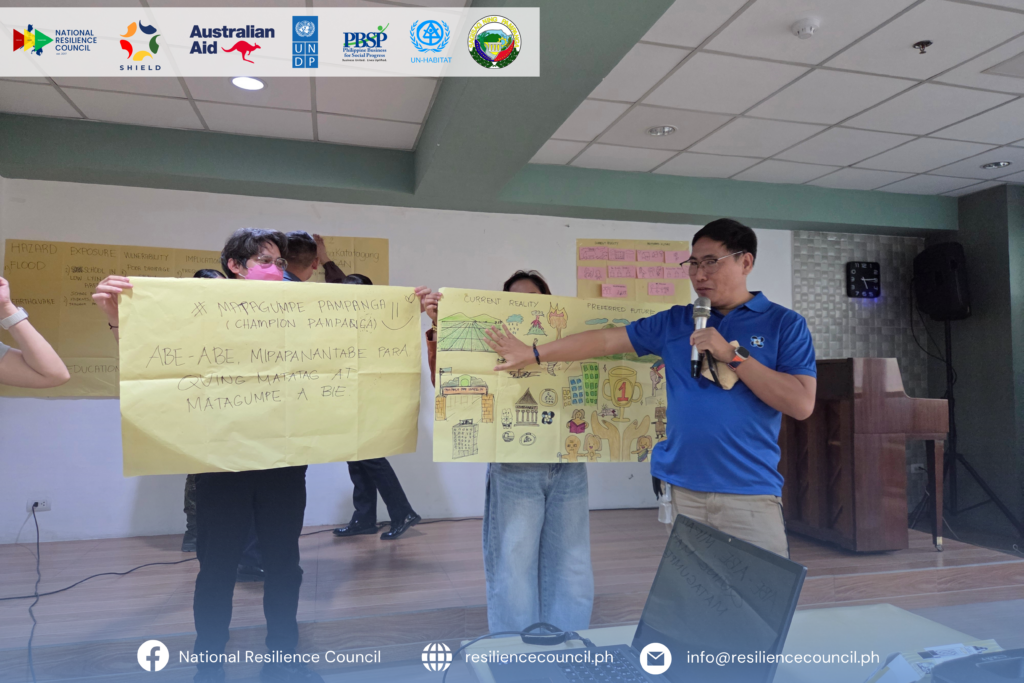
As a key outcome, participants co-created a shared resilience vision for Pampanga: “Matibay sa pagsubok, matatag sa laban,” reflecting unity in advancing adaptive, inclusive, and systems-driven resilience. While current realities point to disaster risks and vulnerable areas, the envisioned future highlights safer homes, organized communities, environmental stewardship, and collective progress—embodying strength, unity, and shared success for Kapampangans.
This vision is further captured through community-driven hashtags that will guide future initiatives:
#TatagangKapampangan
#PisametungangIngKatatagangKapampangan
#MatagumpePampanga