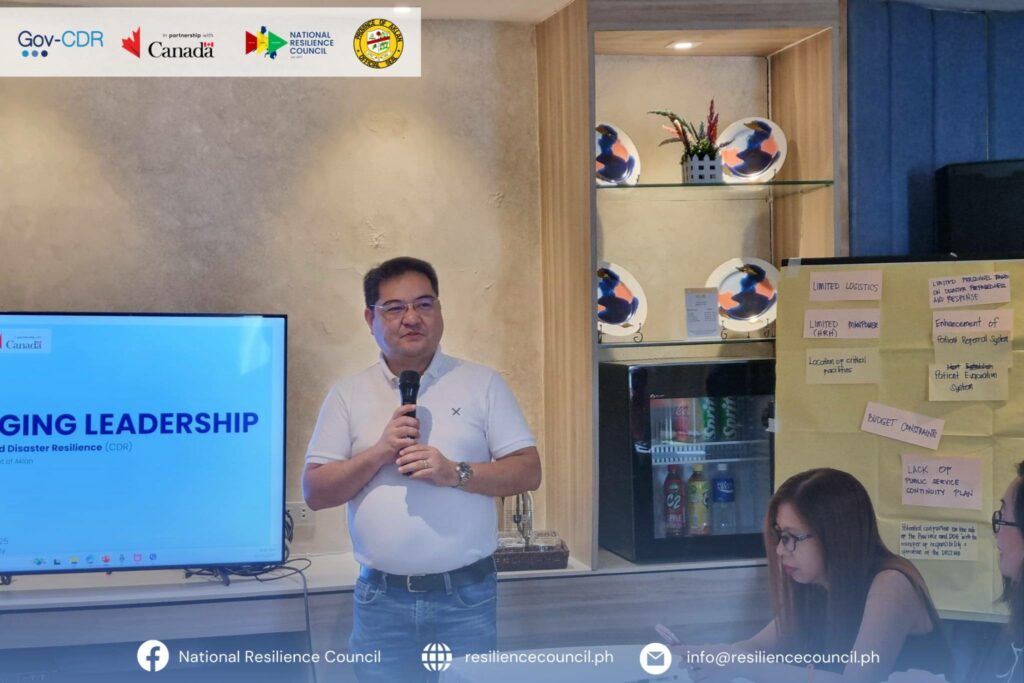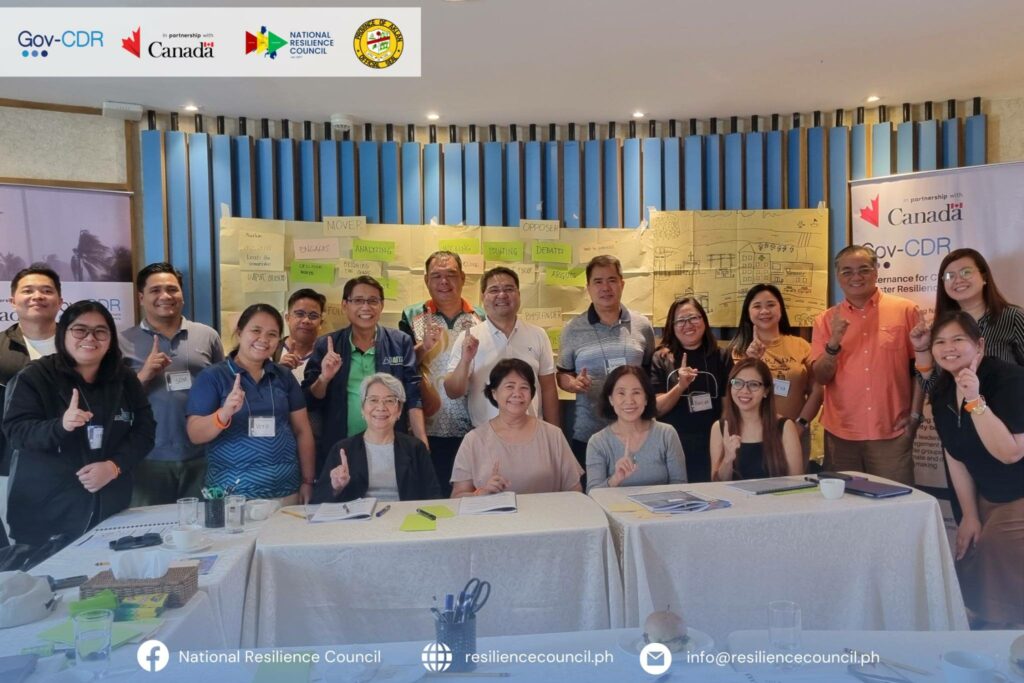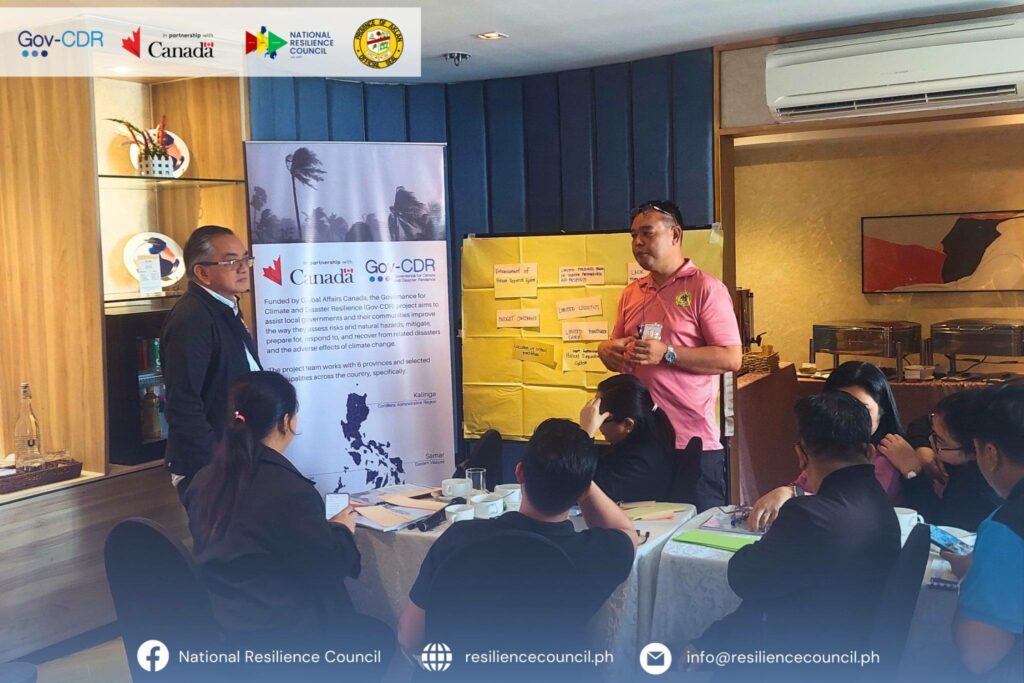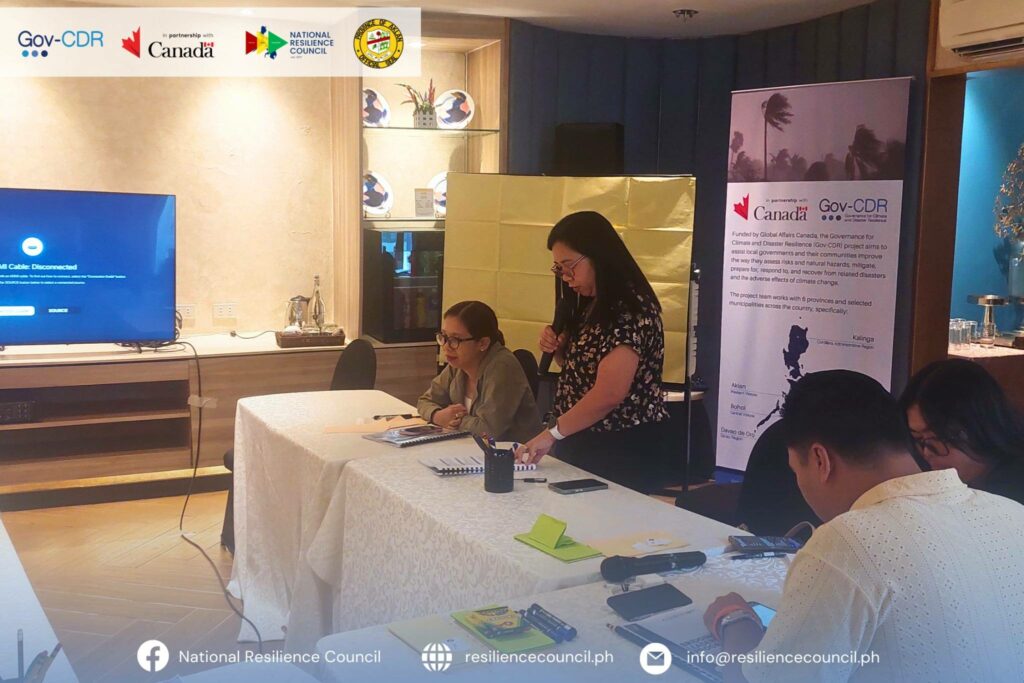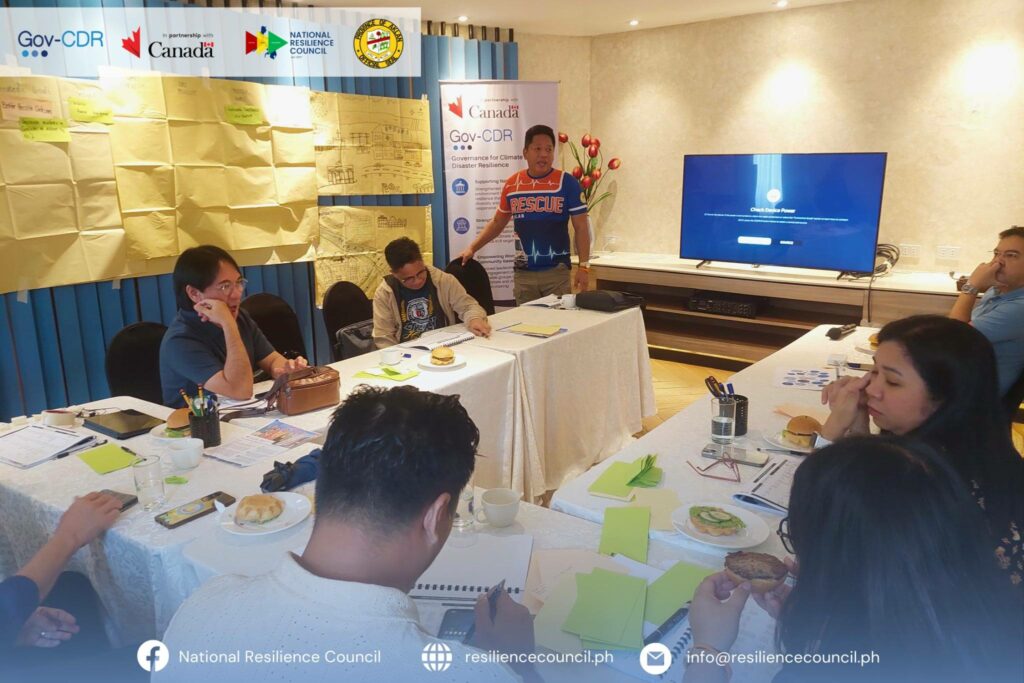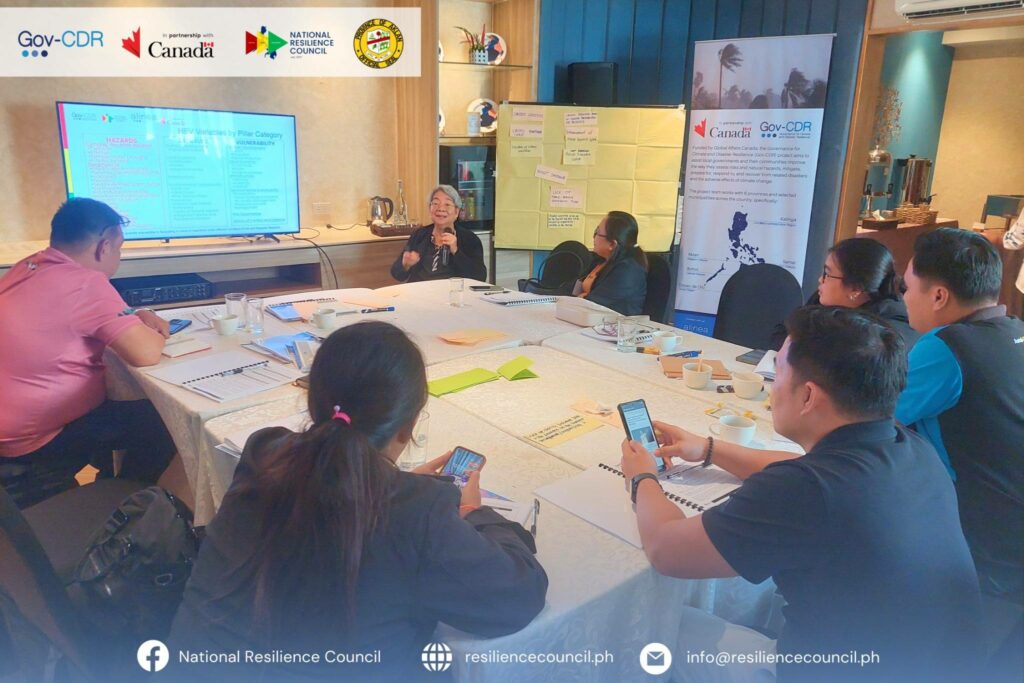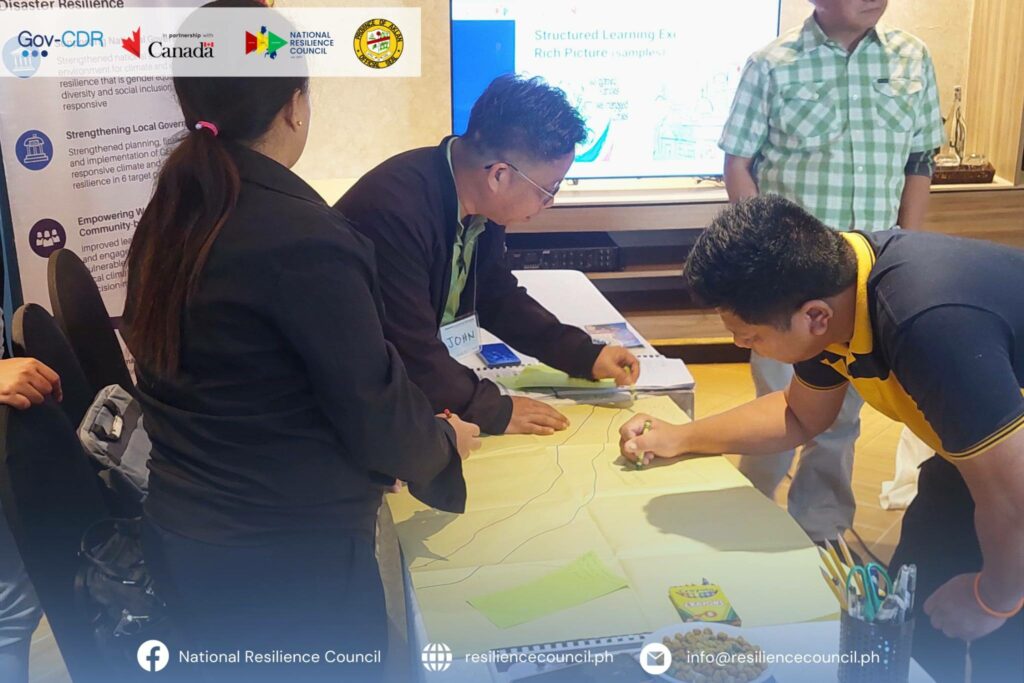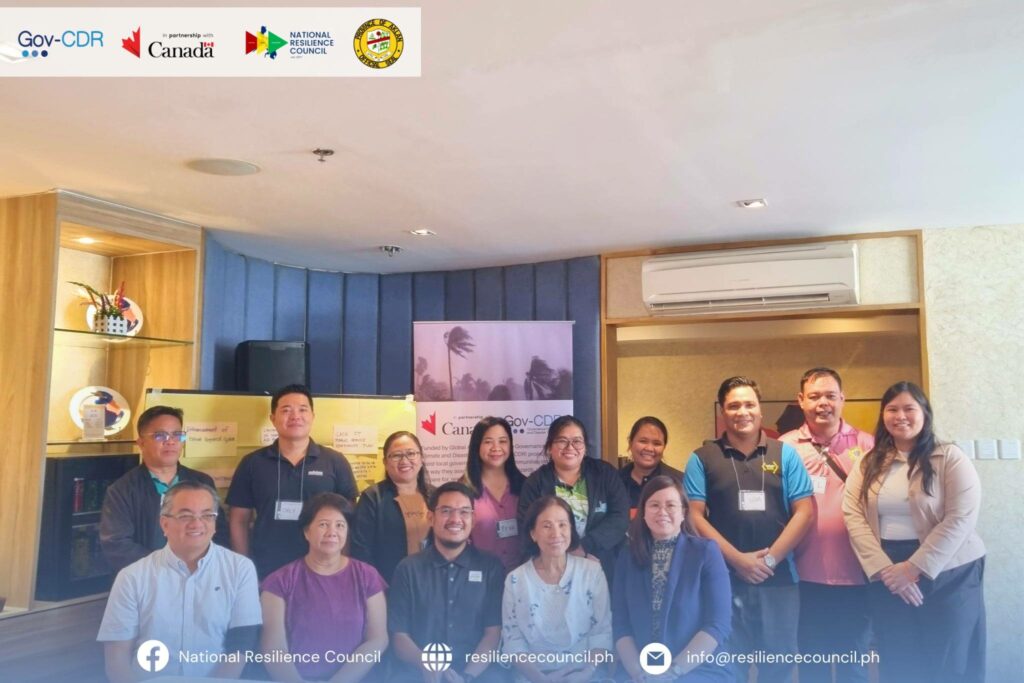
The Governance for Climate and Disaster Resilience (Gov-CDR) recently conducted the second leg of the Bridging Leadership Program on Climate and Disaster Resilience. Held from November 11 to 14, 2025, the session engaged representatives from the Provincial Local Government of Aklan in a deep dive into transformative governance.
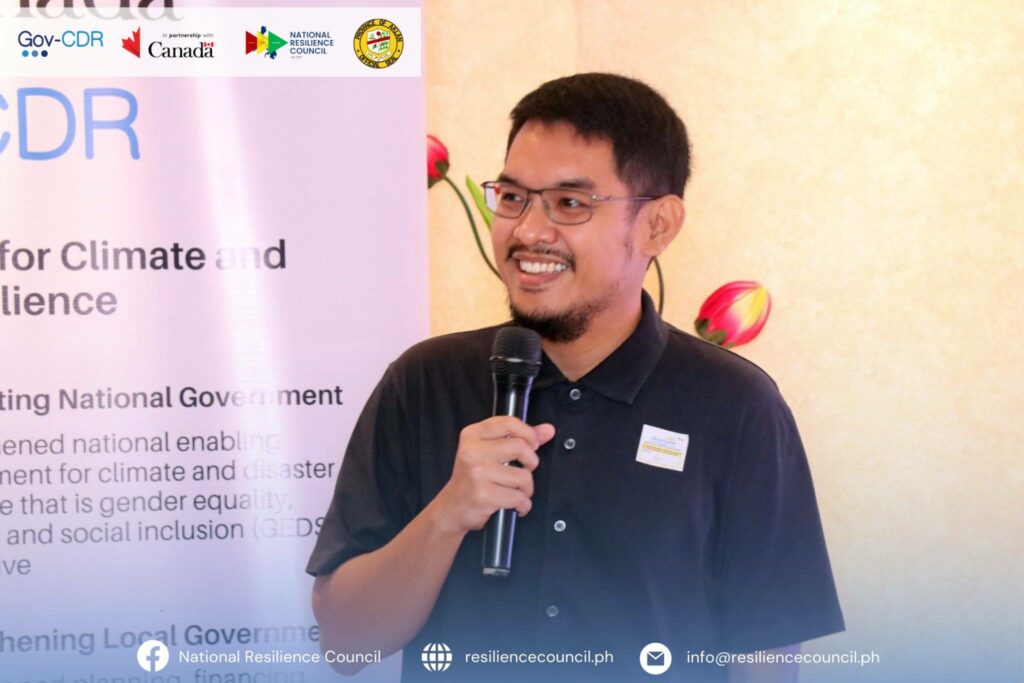
In his opening message, Vice Governor Dexter M. Calizo delivered a powerful call to action. Drawing on Aklan’s lived experience with frequent storms, he redefined the province’s approach to disaster management, emphasizing that true resilience is not merely about “bouncing back.” Instead, he argued that leaders must be proactive, “ready and responsible”, and lead with empathy to ensure communities move beyond survival to truly thriving in a changing climate.
“Alam natin na ang resilience ay hindi lang tungkol sa pagbangon pagkatapos ng sakuna, it is also about being ready and responsible. It is about leading with empathy and vision and making sure that our communities are not just surviving but thriving in a changing climate kaya mahalaga ang training na ito”
(We know that resilience is not just about bouncing back after a disaster; it is also about being ready and responsible. It is about leading with empathy and vision and making sure that our communities are not just surviving but thriving in a changing climate, which is why this training is so important.)
NRC Executive Director Mr. Silvestre Z. Barrameda, Jr. reflected on the nature of resilience work. In his closing message, he described resilience work as “leading a war without waging a battle.” In his closing message, he cautioned against reactive responses, urging a shift from simple concern or care to genuine empowerment. He shared:
“Tayong mga Pilipino, may natural na malasakit sa kapwa pero mas maigi na tulungan natin silang matulungan ang mga sarili nila at bigyan sila ng kakayahan para maging resilient sila.”
(We Filipinos have a natural concern for our neighbors, but it is better to help them help themselves and equip them with the capacity to become resilient.)
Mr. Barrameda reminded the cohort that resilience is complex, context-specific, and must transcend three-year political terms. He emphasized that this transformation requires courage and must be grounded in science to provide a solid basis for better decisions and investments.
This call for science-based, cohesive leadership was illustrated by a real-world dilemma shared by Ms. Grace Ann Perla, the Provincial Fisheries Extension Officer. She noted that while efforts are being made to transition fishermen to sustainable shellfish culture, conflicting policies between neighboring Local Government Units (LGUs) create gaps. When one town protects the ecosystem while its neighbor does not, environmental goals are undermined as activities simply shift to unregulated waters. Her experience underscored that sustainable development requires adaptive leadership and “policy co-ownership”, driven by a collective will to create lasting change rather than mere political favors.
The training concluded with a clear takeaway: true resilience cannot exist in a vacuum. It requires the essential work of bridging gaps, aligning policies, and ensuring that even the most marginalized are empowered to thrive in a safe, sustainable environment.